
If you are short on time, read this short overview:
Homeowners must understand how Polyvinyl Chloride, or PVC decking, compares to capped composite decking before building. PVC decking in Raleigh offers maximum water resistance and a 50-year lifespan, making it ideal for wet areas like pools. Composite decking provides an authentic, dense wood-like look at a lower initial price point. Majestic Outdoors recommends the best material based on your budget, sun exposure, and long-term maintenance preferences.
Selecting the correct decking material is the first step toward building a lasting outdoor space. Homeowners in Raleigh, NC, face high humidity and frequent rainfall, which demands moisture-resistant materials. We specialize in decks, and we recommend TimberTech/AZEK decking products. This deep product knowledge allows us to guide you through the differences between PVC decking in Raleigh and traditional capped composite decking. The comparison comes down to composition, long-term cost, and durability in wet conditions. We help you confidently choose a material that stands up to the local climate.
What is PVC Decking
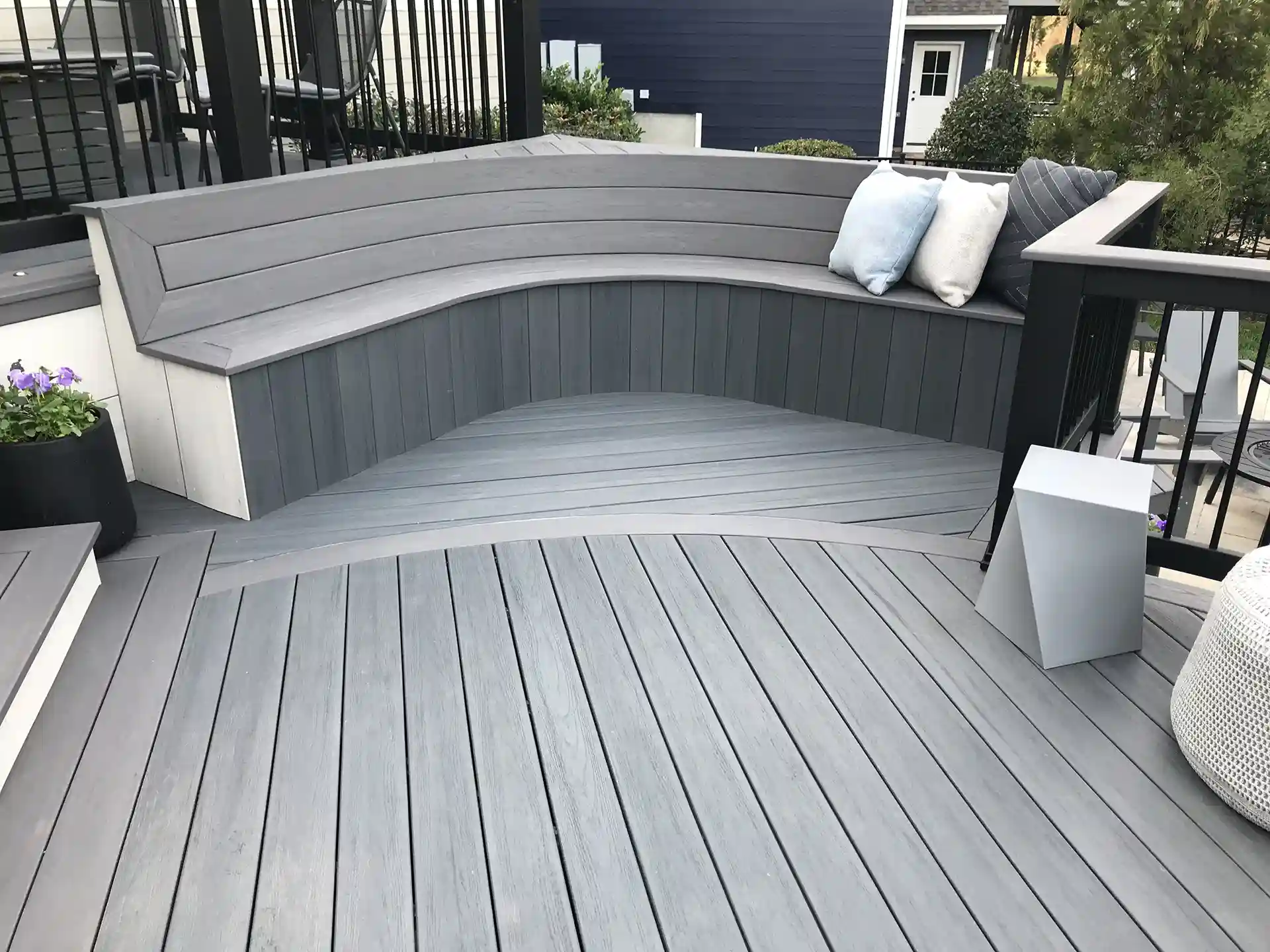
PVC decking is a 100% synthetic product engineered for maximum performance against the elements. We find that homeowners who prioritize complete water immunity and minimal maintenance often choose this material. The advanced polymer formulation makes it an excellent choice for a variety of outdoor applications. The polymer structure resists the problems that plague wood, like warping, splitting, and rot. Our preferred AZEK PVC material gives clients decades of dependable, worry-free outdoor living.
Composition of PVC Decking
PVC decking contains zero wood fiber. The entire board is synthetic, composed of polyvinyl chloride. This purely polymer composition is what gives it superior resistance to water damage, rot, and insects. The boards are manufactured using advanced extrusion techniques. This process ensures a consistent cell structure from the core to the surface. It is manufactured to mimic the grain and color of natural wood without the drawbacks of organic materials. This construction means the boards cannot host mold or mildew and cannot feed wood-destroying pests.
Pros of PVC Decking
PVC’s lack of wood content gives it distinct advantages in performance and longevity. It is engineered specifically for areas where moisture is a constant threat. The initial investment secures a long-term solution for high-moisture or full-sun areas.
- Water Resistance: PVC decking is fully waterproof and completely mold-resistant. This makes the material perfect for low-to-grade applications and pool surrounds where constant water exposure occurs. We often recommend AZEK PVC for installations less than 12 inches off the ground where airflow is limited.
- Low Maintenance: Maintenance for PVC decking is ultra-low. Homeowners clean the surface with a hose, a soft brush, and mild soap. There is no requirement for staining, sanding, or sealing over the life of the deck. The surface coating repels common household stains, simplifying clean-up after daily activities.
- Durability: TimberTech/AZEK PVC decking comes with a 50-year product warranty and a fade and stain warranty. This represents the longest lifespan available from a synthetic decking material. The material resists scratches and denting better than many softwoods.
- Variety in Style: The material is lighter and more flexible than composite, allowing for detailed design work and custom shapes. It comes in a variety of realistic wood textures and consistent appearances. Collections like the TimberTech/AZEK Vintage line offer the look of reclaimed wood, giving a distinct character to the outdoor space.
Cons of PVC Decking
The advanced performance of PVC decking materials presents a couple of tradeoffs homeowners must consider. We always outline these factors clearly to set proper expectations. The benefits of zero wood content must be weighed against these points.
- Higher Initial Cost: PVC decking is the most expensive decking option in terms of upfront material cost. The total material cost can exceed composite by 15 to 25 percent. The long-term savings on maintenance and replacement often justify the investment.
- Temperature Sensitivity: All synthetic materials can experience some thermal expansion and contraction. Despite this, AZEK PVC is specifically engineered to stay cooler underfoot than many composite options in direct sunlight. We use specialized fasteners and gapping techniques to account for natural movement.
- Environmental Impact: While PVC decking avoids deforestation, it is a purely synthetic material. Majestic Outdoors recognizes that other materials offer a higher percentage of recycled content.
Composite Decking
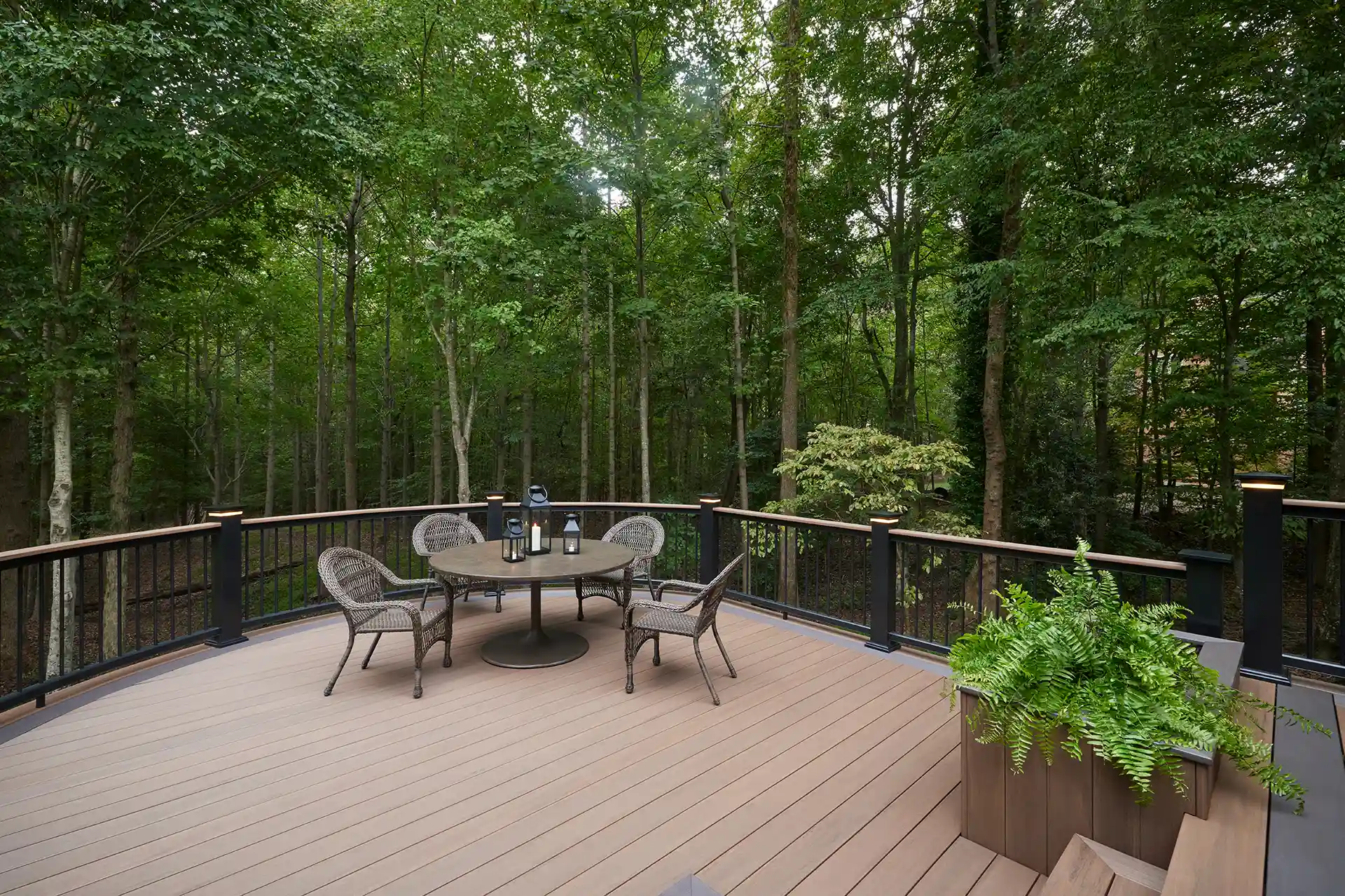
Composite decking is a highly popular option that provides a superior balance of durability and authentic wood texture. This material is a significant upgrade from traditional wood and offers low maintenance. We recommend composite for homeowners seeking a traditional deck look with high-level performance. Composite boards deliver a dependable surface that resists moisture, insects, and decay common with traditional lumber.
Composite Decking Composition
Composite decking combines reclaimed wood fibers with recycled plastics. This blend forms a dense, strong board. The TimberTech composite boards we install feature a polymer cap that shields the core on three or four sides. The polymer cap acts as a barrier, preventing moisture from reaching the wood fibers inside. This protective layer is what gives the board its stain and fade resistance.
Pros of Composite Decking
The hybrid composition of composite decking offers distinct benefits in appearance and cost. This material provides excellent long-term value for a lower upfront investment. The dense core provides a stable and sturdy feel underfoot.
- Natural Appearance: Composite decking offers a realistic, authentic wood look and feel. The wood grain patterns and rich colors mimic traditional hardwoods closely. Collections like TimberTech Reserve offer deep, realistic tones that reflect real wood variation.
- Eco-Friendly Options: This material uses recycled wood fibers and plastics in its construction. Using recycled materials reduces landfill waste and is a greener option than traditional wood. We prioritize manufacturers who demonstrate a commitment to sustainability.
- Resistance to Elements: The polymer cap on composite boards defends against stains, scratches, and mold growth. This protection ensures the boards remain intact under typical outdoor conditions. Composite decking resists splintering and cracking better than cedar or redwood.
- Longer Lifespan: TimberTech composite decking is warrantied for up to 30 years. This material will outlast traditional wood by decades. The warranty coverage protects the homeowner’s investment against structural and cosmetic issues.
Cons of Composite Decking
While composite decking is a strong performer, it requires different considerations than a pure PVC board. We discuss these items with every client during the planning phase. The small percentage of wood fiber in the core means composite is not entirely waterproof.
- Maintenance Requirements: Composite decking requires simple cleaning with soap and water. The material does not require the staining or sealing associated with traditional lumber. It may need periodic power washing, particularly for entry-level lines.
- Color Fading: The polymer cap is engineered to resist color fading. Unlike wood, the material maintains its color and texture season after season. The initial color may shift slightly during the first few months of sun exposure.
- Higher Upfront Cost: Composite decking is less expensive than PVC but is a higher initial investment than pressure-treated wood. The long-term value from minimal maintenance quickly outweighs the higher upfront cost. This higher upfront investment is recouped over time through reduced labor and material costs.
Cost Comparison: Composite vs PVC Decking
Decking material cost is a key decision point for homeowners. We must look at the overall price structure, not just the initial ticket price. The initial material investment and long-term maintenance costs are the two main factors. Understanding the total cost of ownership over a 20-year period provides the clearest picture of value.
| Feature | TimberTech Composite | TimberTech/AZEK PVC |
| Price Range | $$ (More budget-friendly) | $$$ (Higher initial cost) |
| Lifespan | 25-30 years | Up to 50 years |
| Warranty Length | Up to 30 years | Up to 50 years |
| Maintenance Needs | Low-maintenance (no staining or sealing) | Ultra-low-maintenance (just soap and water) |
PVC decking costs more upfront because of its advanced, non-wood composition. The higher price secures a longer warranty and better water resistance. This material offers maximum longevity for homeowners who intend to stay in their homes for many years. Composite decking offers a lower initial price point, making it a budget-friendly material. Both materials eliminate the recurring cost of sanding, staining, and sealing required for wood. The maintenance savings alone can amount to thousands of dollars over the material’s lifespan.
Environmental Impact
We understand that environmental impact is an increasingly important factor for Raleigh homeowners. Both PVC and composite options offer environmentally responsible qualities compared to traditional lumber.
The materials reduce the need for constant deck replacement. The process of manufacturing synthetic decking keeps materials out of landfills. TimberTech’s approach to composite incorporates post-consumer recycled materials.
The TimberTech/AZEK line avoids wood entirely, reducing deforestation and providing a greener option for decking. We can confirm that composite decking utilizes a blend of recycled wood fibers and plastics. PVC decking (AZEK) is 100% synthetic, which prevents the need to cut down any trees. Choosing either synthetic material supports sustainable practices. We encourage clients to review the specific manufacturing practices of TimberTech to understand their commitment to environmental responsibility.
Climate Considerations For Raleigh
The humid, wet climate of Raleigh, NC, creates specific demands for decking materials. Materials must be highly moisture-resistant to prevent rot, mold, and mildew. This local climate makes the choice between PVC and composite materials extremely important. Raleigh’s combination of hot summers and high dew points accelerates decay in unprotected wood.
- Moisture and Mold Resistance: TimberTech/AZEK PVC is completely impervious to water, rot, and mold. This material is the best defense against Raleigh’s humidity and frequent heavy rains. Capped composite boards also provide a robust barrier but are not fully waterproof.
- Heat Retention: In hot North Carolina summers, PVC decking stays cooler underfoot than many capped composite boards. Composite decking retains more heat under direct sun exposure. We suggest lighter colors for any deck that receives intense afternoon sun.
- Deck Ventilation: Proper installation, including adequate deck ventilation, is critical for all synthetic decks in humid environments. We design and install the substructure to maximize airflow and minimize moisture buildup. The building code requires specific clearances between the joists and the ground.
Should You Choose Composite Or PVC?
Homeowners make the material choice by balancing budget, aesthetic preference, and long-term performance needs. Both composite and PVC decking products outperform traditional wood. The best choice depends entirely on the deck’s specific location and exposure. We use our detailed questionnaire to determine the best material for your specific outdoor area.
When to Choose PVC Decking
- Ground-Level Applications: The deck will be ground-level or very close to the earth.
- Water Exposure: The deck is built around a pool or hot tub with constant water exposure.
- Lifespan Priority: You prioritize the longest possible material lifespan (up to 50 years).
- Surface Temperature: The deck faces intense, direct sun exposure, and you want a cooler surface.
- Design Flexibility: You need maximum flexibility for complex design features like curved deck sections.
When to Choose Composite Decking
- Initial Cost: You require a more affordable initial material cost.
- Aesthetic Priority: You want the densest, most authentic wood-like grain and texture.
- Airflow: The deck is elevated and receives adequate airflow underneath.
- Warranty Comfort: You are satisfied with a 25- to 30-year product warranty.
- Board Rigidity: You prefer a board with greater rigidity than wood-fiber content provides.
Why Homeowners in Raleigh Trust Majestic Outdoors
Deck projects in Raleigh aren’t just about looks: They’re about longevity, structure, and how well your materials perform in a high-humidity climate. At Majestic Outdoors, we specialize in exactly that. Our team brings precise, technical knowledge of how synthetic decking materials behave over time in North Carolina’s conditions, and we build every project with that in mind.
We focus exclusively on premium, low-maintenance materials like TimberTech composite decking and AZEK Advanced PVC. But we don’t just install decking: We design and build outdoor spaces that stand the test of time.
Ready to Schedule a Design Consultation?
When you’re ready to move forward, we’re here to make the process clear. We’ll help you compare materials, prioritize your design goals, and create a plan that respects your timeline and budget. Whether you’re considering advanced PVC decking or high-performance composite in Raleigh, we’re ready to put our expertise to work on your behalf. Let’s schedule your consultation and start building a deck that’s made to last.
PVC Decking FAQs
Which decking material is better for Raleigh’s climate?
PVC decking is the better overall material for Raleigh’s humid climate because it is 100% synthetic, making it fully waterproof and impervious to mold. The pure polymer composition provides the best defense against high moisture and is ideal for ground-level applications or pool surrounds. While composite is a high-performance material, PVC secures the longest lifespan with a 50-year warranty, minimizing long-term concern for homeowners.
Can I install a composite deck over my existing wood deck?
It’s possible, but we would not recommend it. The existing deck substructure must be structurally sound and free of rot or damage. We assess the health of the joists and frame before recommending this approach.
How often do I need to maintain a PVC deck?
PVC decking is an ultra-low-maintenance material. Regular maintenance only requires occasional cleaning with a soft brush, mild soap, and water. You never need to sand, stain, or seal the material.
Are there eco-friendly decking options available?
Yes, there are eco-friendly options available in both material types. Composite decking is made from a blend of recycled wood fibers and plastics. PVC decking is made with no wood content, which reduces deforestation.
What is the lifespan of a composite deck compared to PVC?
PVC decking has a significantly longer lifespan than composite decking. TimberTech composite decking is warrantied for up to 30 years. AZEK PVC decking is backed by a 50-year product warranty.