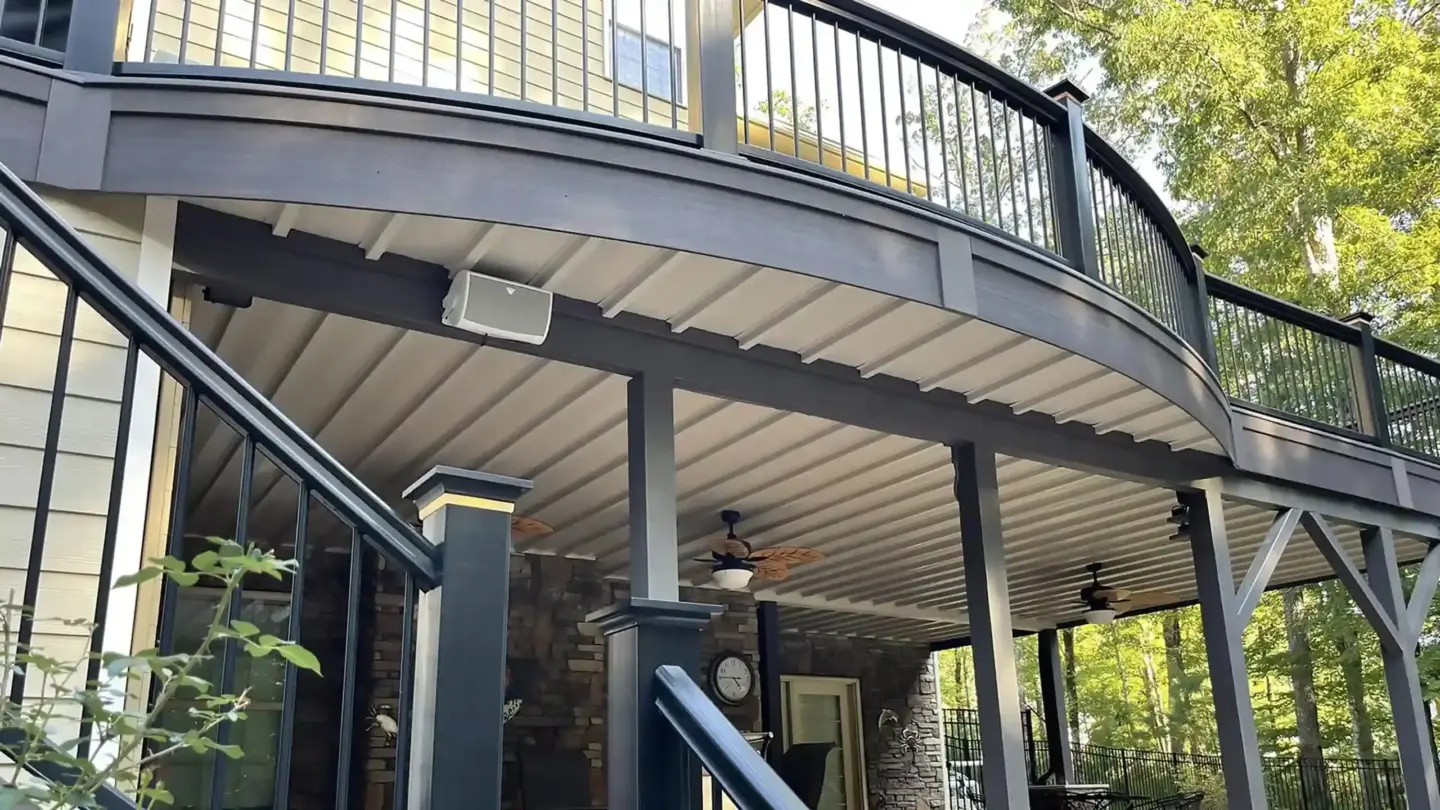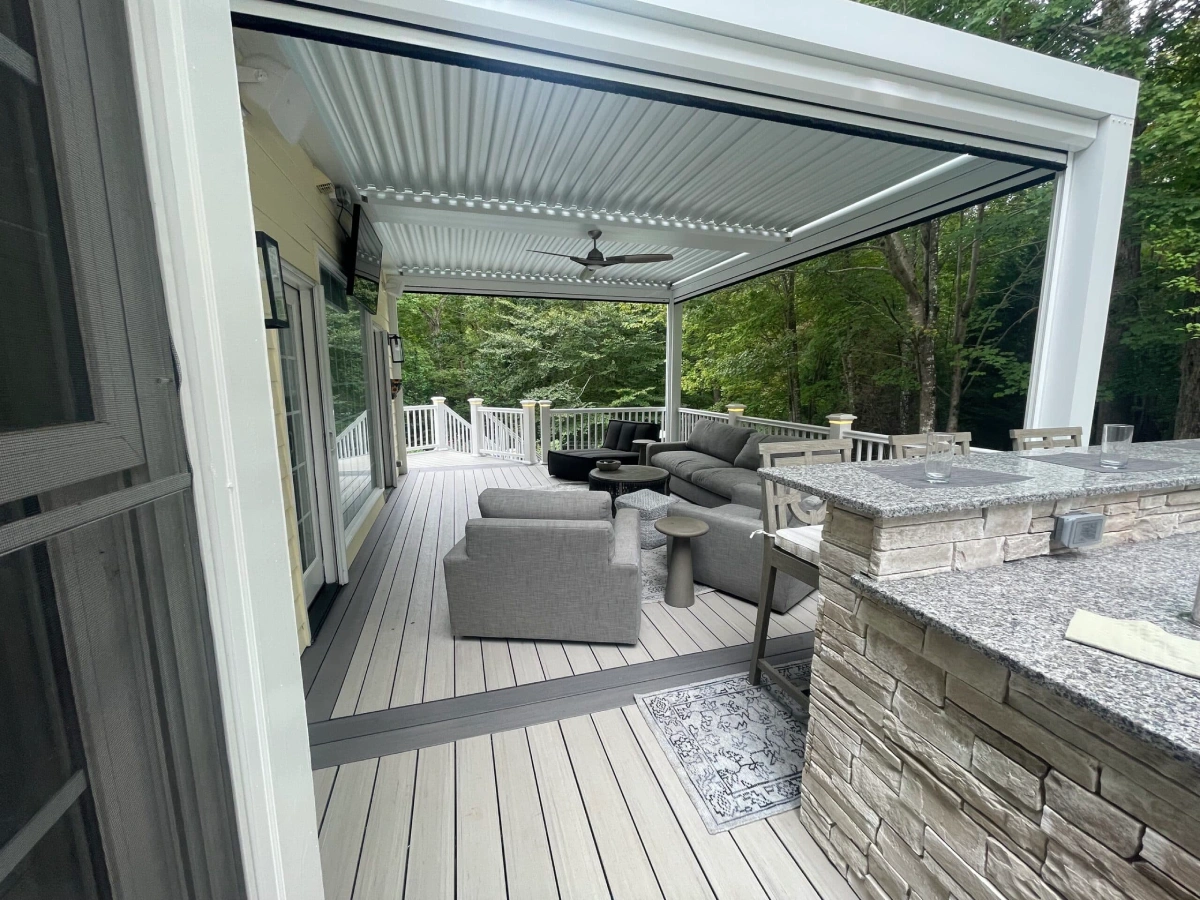

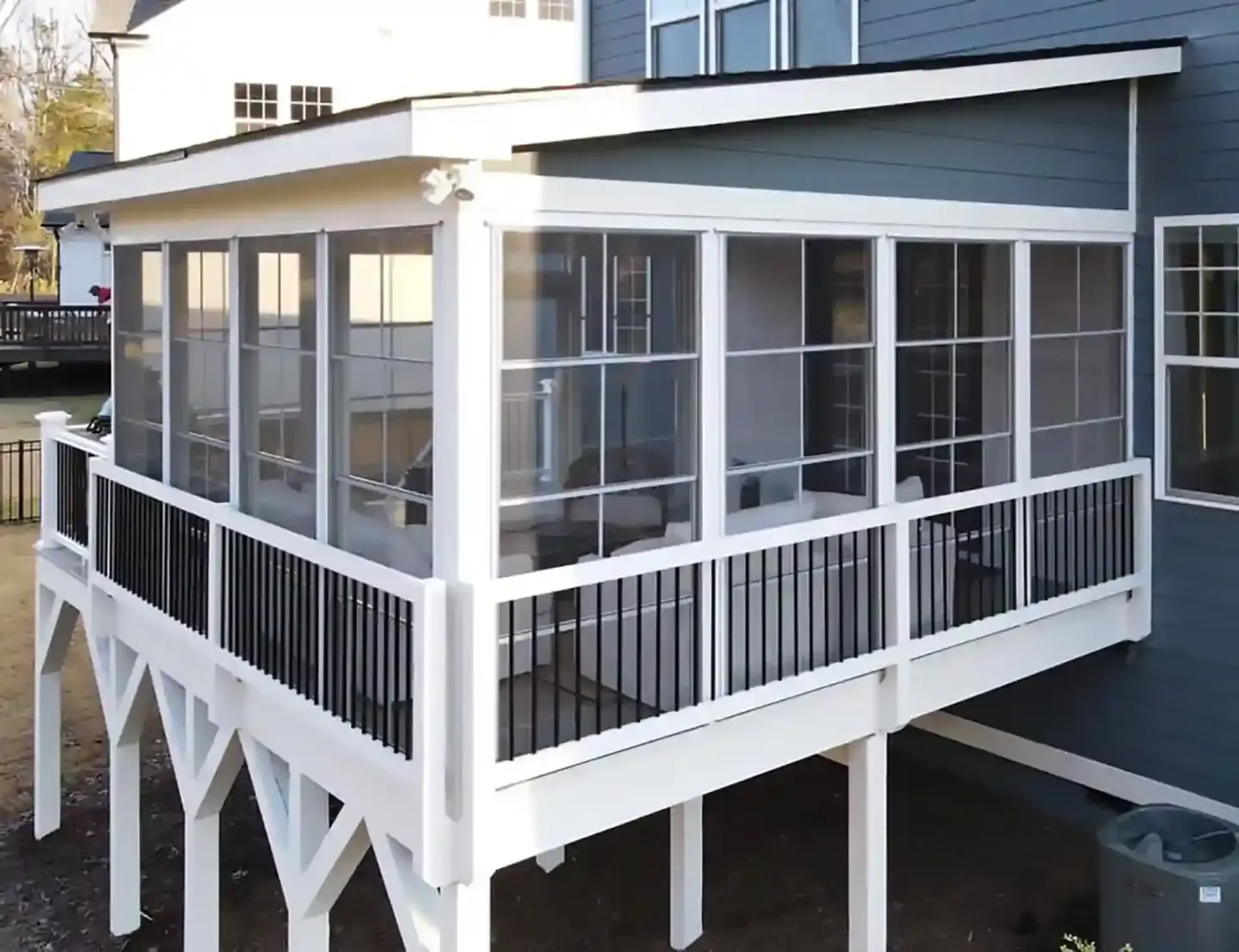
The frame is the part of your deck nobody sees, but it determines everything about how long the structure lasts. In Durham, where Piedmont clay shifts beneath every footing and humidity stresses every connection, the deck framing decisions made before the surface boards go down decide whether the structure holds up for decades or fails in under a decade. The wrong choices show up as sagging boards, loose railings, and shifting posts within just a few short years.
This guide explains what North Carolina code requires for residential framing, how Piedmont soil affects every footing, and how material choice shapes the lifespan of the entire structure on your Durham property over time.
What NC Building Code Requires
North Carolina follows the NC Residential Code, which sets specific standards for footing depth, joist spacing, beam sizing, ledger board attachment, and lateral load connectors. Cutting corners on any of these requirements creates a deck that may pass cosmetic inspection but fails structurally within years, often without warning until something gives way during normal use by family or guests gathered for outdoor entertaining.
Code requires footings to extend below the frost line, which in Durham sits at roughly 12 inches but is typically dug deeper for stability against soil movement. Ledger board attachment must use lag bolts or through-bolts at prescribed spacing, plus lateral load connectors that prevent the deck from pulling away from the home. A qualified contractor handles permit acquisition and ensures every part of the deck framing meets current NC code from the first post hole onward through final inspection.
How Piedmont Soil Affects Every Footing
Durham sits on the same red clay that defines the entire NC Piedmont. The soil holds water, expands when saturated, and contracts during dry summer stretches, creating constant pressure on every footing across the deck framing system. This expansion and contraction cycle puts more stress on footings than the soil in flatter, sandier regions ever delivers, and it accelerates failures on decks built without proper anchoring below the active zone.
Two footing methods work well for deck framing in Durham. Traditional concrete footings poured 24 to 36 inches deep anchor the structure below the active soil zone where clay movement is strongest throughout the year. Helical piers screw into the ground until they hit firm bearing soil, which bypasses the unstable upper layers entirely. The right choice depends on the lot, the slope, the load the deck needs to carry, and how disturbed the surrounding soil has been by previous construction or landscaping work.
Wood Framing for Durham Builds
Wood framing remains the most common choice for residential deck framing in Durham thanks to its affordability, availability, and proven track record across the region. The category includes traditional dimensional lumber as well as engineered options that deliver significantly better performance in the humid Piedmont climate than standard stock pulled from a big-box store shelf.
PWT Lumber (Premium Wood Treated) and KDAT Lumber represent the upper end of the wood category and perform far better than basic pressure-treated stock available at most suppliers. PWT uses laminated veneer construction that resists twisting and shrinking as the wood dries after installation. KDAT is kiln-dried after treatment, which removes excess moisture before the boards leave the mill and keeps the deck framing dimensionally stable through the first crucial year of seasonal wet-dry cycles.
Aluminum Framing for Premium Longevity
Aluminum is the premium choice for homeowners who want a deck that lasts 40 years or longer with virtually no maintenance. The material never rusts, never rots, and never warps, which makes it ideal for Durham’s humid Piedmont climate where moisture is the single biggest threat to outdoor wood structures regardless of treatment quality or installation care. Aluminum simply does not care about humidity, ground contact, or freeze-thaw stress the way wood does over time.
TimberTech Aluminum is the leading aluminum option for residential deck framing in the area. The system carries warranties that match or exceed premium composite decking, allows longer spans with fewer support posts, and stays dimensionally stable through every season. The upfront cost runs higher than wood, but the lifespan and zero-maintenance performance make it the smartest long-term investment for homeowners staying in their Durham home for the long haul.
Span, Load, and Long-Term Durability
Deck framing geometry matters as much as material. Joist spacing, beam size, post placement, and connector hardware must all follow NC code and the manufacturer’s span tables for the specific material being used. A bouncy deck signals incorrect spacing or undersized framing, and these issues only get worse over time as the structure ages, fasteners loosen, and load patterns shift across the surface boards above.
Long-term durability also depends on the small details that homeowners rarely think about, including proper flashing at the ledger, correct fastener selection at every connection, and ventilation beneath the deck surface to prevent moisture buildup against the framing. For expert deck framing design and installation in Durham and across the surrounding North Carolina communities, contact Majestic Outdoors at (919) 482-5476 to schedule a consultation and build a deck that lasts.