
If you are short on time, read this short overview:
Deck waterproofing protects your deck’s structure from rot and extends its functional life far beyond what unprotected wood allows. The correct application of surface sealers or a full under-deck waterproofing system prevents structural failure and keeps the area beneath dry. Majestic Outdoors uses proven contractor-grade materials in Raleigh, NC, to deliver reliable protection against water damage. We provide long-term deck waterproofing solutions that protect your property value and eliminate future repair costs.
Deck waterproofing is a non-negotiable investment in your outdoor structure’s longevity. Moisture penetration compromises the structural integrity of wood components, leading to expensive repairs and a shortened lifespan.
As experienced contractors, we focus on material science and application precision to deliver a lasting shield against rain and humidity. Majestic Outdoors ensures your new or existing deck in Raleigh, NC, remains sound and stable for decades.
What is Deck Waterproofing?
Deck waterproofing involves applying a protective barrier to prevent water from soaking into the deck’s substructure and surface materials. This process defends against structural rot, mold growth, and insect infestation that thrive in damp wood. A proper waterproofing job directs water away from the foundational components of the structure.
Common Types of Deck Water Damage
Water damage manifests in several distinct ways, all of which compromise the deck’s integrity. Homeowners often mistake surface wear for deeper, structural issues caused by moisture penetration. Understanding the signs helps determine the necessary type of deck waterproofing repair.
- Wood Rot and Decay: Water saturates the wood fibers and feeds fungal growth, which breaks down the structure. Rotting components like joists and posts fail under load, creating a safety hazard.
- Mold and Mildew: Surface moisture and humidity can lead to mold growing on deck boards, creating slick spots and an unsightly appearance. This surface issue indicates a larger moisture problem below.
- Failed Fasteners and Hardware: Water accelerates the corrosion of metal screws, bolts, and connecting plates. Rust weakens the structural connections, leading to instability in the railing and deck frame.
- Concrete Spalling: If the deck sits over a concrete patio or basement, water pooling can degrade the concrete surface over time. This leads to crumbling and cracking in the slab below the deck.
Benefits of Waterproofing
Investing in deck waterproofing offers tangible, long-term benefits that secure your property investment. We install systems that deliver structural security and expanded usability.
- Structural Preservation: Waterproofing stops water from reaching and deteriorating the main support posts and joists. This keeps the substructure solid and prevents premature structural replacement.
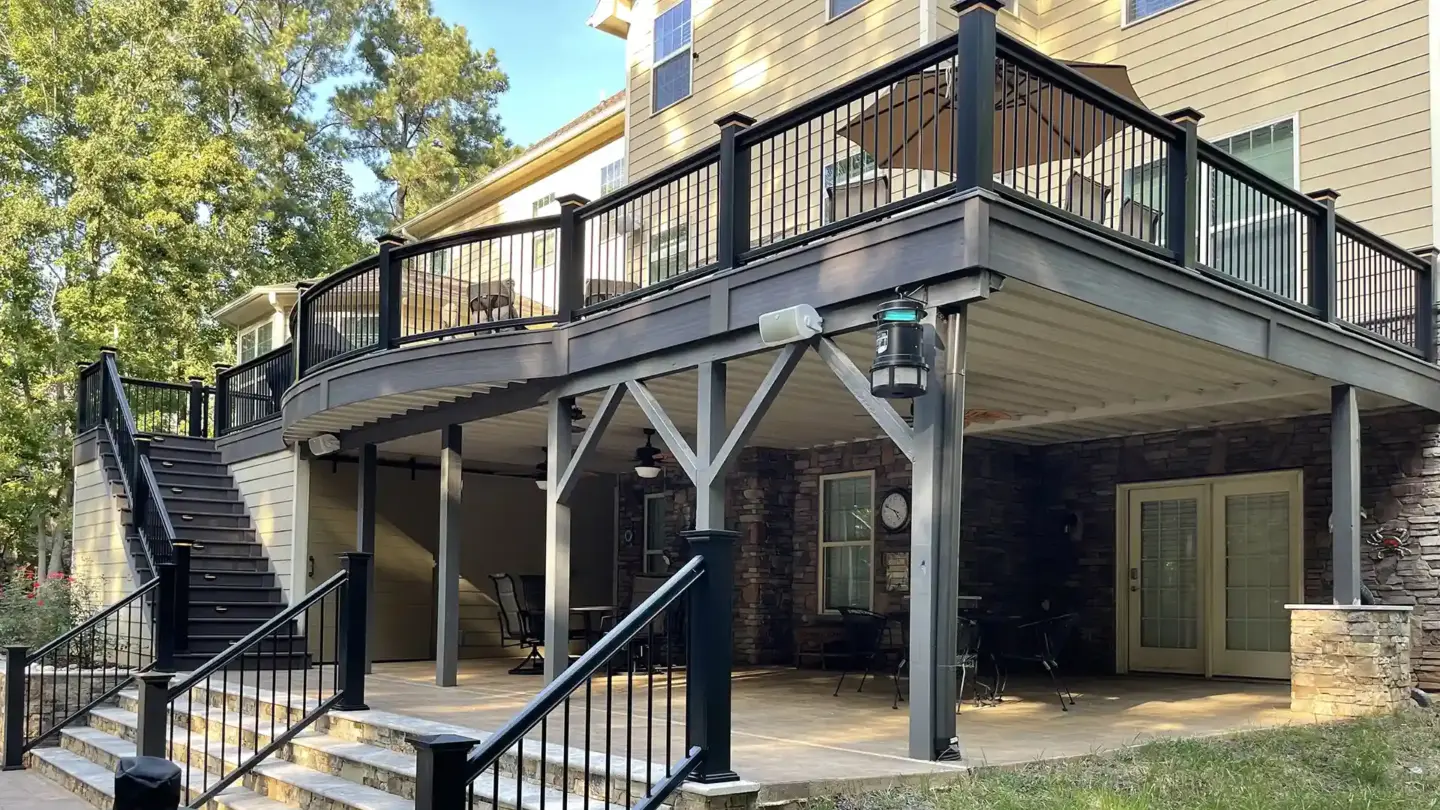
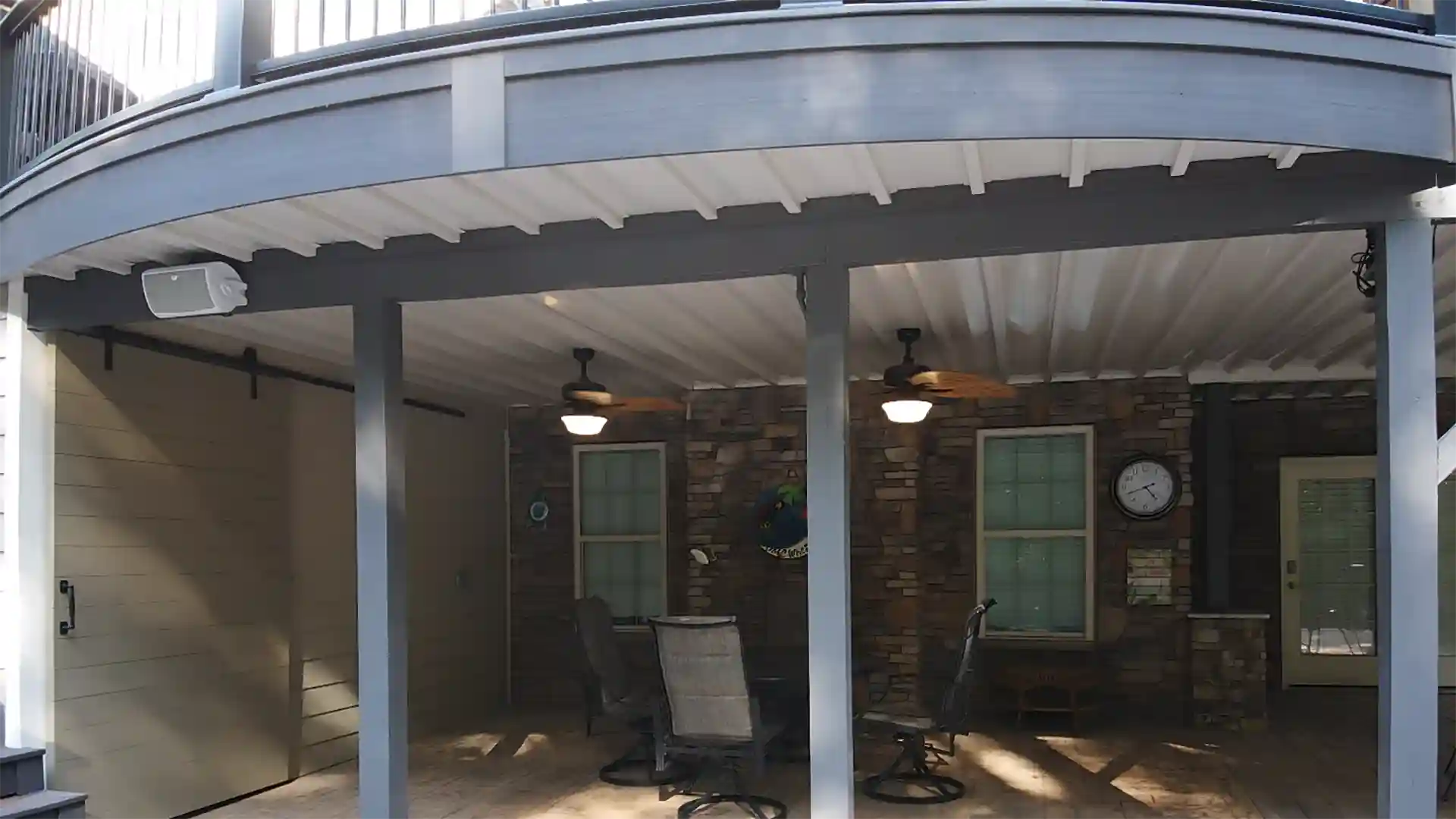
- Expanded Usable Space: Under-deck waterproofing systems create a dry, protected zone underneath an elevated deck. This area can function as an additional patio, storage space, or covered entry.
- Increased Property Value: A well-maintained and protected deck increases the overall appeal and value of a home.
Deck Waterproofing Methods
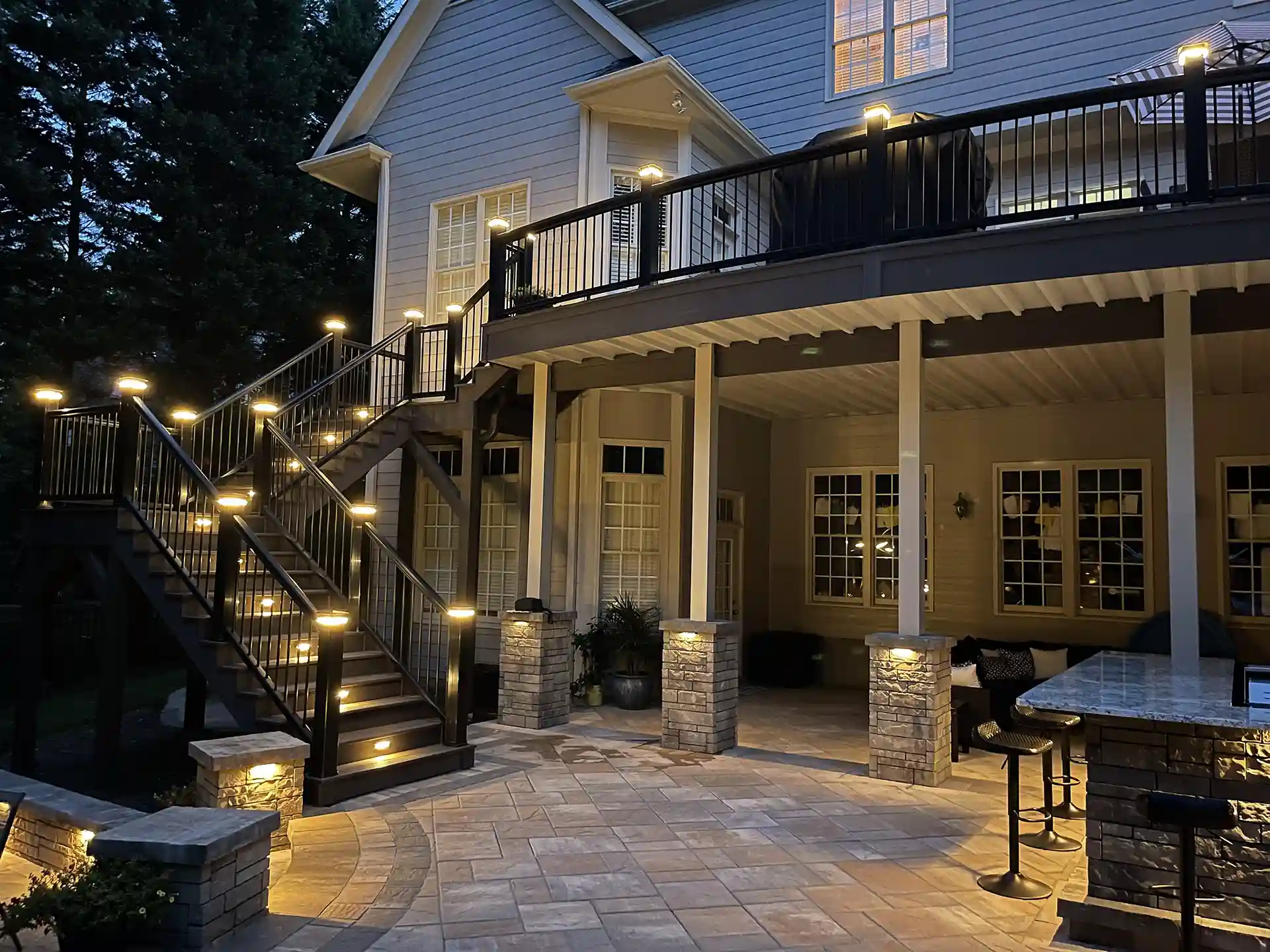
We evaluate a project based on whether the goal is to protect the deck boards or to create dry usable space underneath. The method we select dictates the materials and the application process. We discuss these methods with every homeowner to set realistic performance expectations.
Surface Sealers
Surface sealers are coatings applied directly to the deck boards to repel water on contact. These products penetrate the wood’s pores and create a hydrophobic barrier. This is the most common method for general wood deck waterproofing.
- What They Are: Surface sealers are clear or tinted liquid compounds that use oil, silicone, or acrylic bases. They prevent surface water from soaking into the deck boards.
- How to Apply: Clean the deck thoroughly to remove all dirt, mildew, and existing failed finish. The sealer is applied using a sprayer, roller, or brush in thin, even coats. The wood must be completely dry before application to ensure proper adhesion.
Pros and Cons
- High Upkeep: Surface sealers require reapplication every 1-3 years, depending on the product and climate exposure.
- Cost-Effective: The initial material and labor costs are lower than membrane systems.
- Breathability: Many sealers allow wood to breathe, preventing moisture trapped inside the board from causing subsurface rot.
Membrane Systems
A membrane system is a fully adhered, continuous sheet or liquid application that creates a total waterproof barrier. These systems are non-negotiable for decks built over living spaces or concrete slabs. They entirely block all water movement through the deck surface.
- What They Are: Membranes are thick, flexible sheets of material that form an impenetrable barrier over the deck sheathing. Liquid-applied membranes are also available, which cure into a tough, rubberized coating.
- How to Apply: The deck substrate must be perfectly clean and structurally sound. The sheets are rolled out, cut to size, and either adhered with specialized adhesives or mechanically fastened. All seams are heat-welded or overlapped and sealed with chemical primers to ensure a continuous seal.
EPDM
EPDM (Ethylene Propylene Diene Monomer) is a durable synthetic rubber roofing membrane. It is applied in large sheets and fully adhered or mechanically fastened to the deck substrate. EPDM is exceptionally long-lasting and resistant to UV and temperature changes.
PVC
PVC (Polyvinyl Chloride) is a flexible, thermoplastic membrane known for its strength and ability to be welded at the seams. This creates a monolithic, non-permeable surface that is ideal for deck waterproofing. It provides excellent longevity and protection.
TPO
TPO (Thermoplastic Polyolefin) is a single-ply membrane often used in flat roofing but is also a viable deck waterproofing solution. TPO is heat-weldable, offering seam integrity and high resistance to tears and punctures.
Pros and cons
- Total Protection: Membrane systems offer the highest level of waterproofing protection available.
- Complex Installation: Installation is a specialized skill requiring precise seam work and substrate preparation.
- High Initial Cost: Material and labor costs are significantly higher than sealers, but the lifespan is 15–30 years.
Under-Deck Drainage Systems
Under-deck drainage systems protect the space beneath the deck, not the deck structure itself. These systems catch water that passes through the deck boards and divert it away via a gutter system. They do not prevent water from soaking into the joists.
- What they are: These systems use troughs, panels, or membranes installed below the joists and above the ground or sub-patio. The panels are angled to guide collected rainwater into a perimeter gutter.
- How to apply: Panels are typically secured directly to the underside of the deck joists. The system creates a ceiling that funnels water to a discharge point. Joist flashing is also installed over the joists to protect them individually.
Pros and cons
- Dry Space Creation: This is the best method for creating a guaranteed dry area underneath an elevated deck.
- No Deck Board Protection: Water still passes through the deck boards and contacts the joists before hitting the system.
- Relatively Quick Installation: Systems are designed for modular installation and can be added to existing decks.
Choosing the Right Waterproofing Material for Your Deck
Selecting the correct deck waterproofing material involves assessing the deck’s primary material, the local climate, and the intended use of the space. Majestic Outdoors provides a material consultation to match the product to the structure.
Consider Deck Type and Material
The type of deck surface determines the type of waterproofing that will bond and perform correctly. Different materials have different porosity and expansion rates.
- Waterproofing Wood Decks: Pressure-treated lumber, cedar, and redwood require penetrating surface sealers to allow the wood to breathe and release moisture. A membrane can trap moisture and accelerate rot if not applied over a protected substrate.
- Composite Deck Waterproofing: Composite and PVC deck boards do not require surface waterproofing; their composition is already moisture-resistant. The wooden substructure (joists, beams) beneath composite decking still needs protection with joist tape or an under-deck system.
Climate Considerations
The Raleigh, NC, climate requires materials that handle both high humidity and seasonal rain. We select products with excellent adhesion and UV resistance.
- Humidity: Materials must resist mold and mildew growth in constantly damp conditions. Membrane systems and high-quality sealers perform best in high-humidity environments.
- Sun Exposure: UV rays degrade non-resistant sealers and membranes rapidly. We only use contractor-grade products with high UV stabilizers.
Cost vs. Value
Homeowners should consider the total cost of ownership, not just the upfront expense. A cheaper, less durable material may cost more over time in reapplication and repairs.
- Long-Term Investment: A high-quality membrane system has a higher upfront cost but provides 20+ years of maintenance-free service. This minimizes the lifetime ownership cost.
- Repair Avoidance: Investing in proper substructure protection prevents the most expensive repair—replacing rotted deck framing and support posts. We prioritize structural security over minimal initial material cost.
Step-By-Step Guide to Waterproofing Your Deck
Proper deck waterproofing is a meticulous, multi-stage process that cannot be rushed. Here is a detailed procedure to ensure the material performs as designed and guaranteed.
Preparation
Preparation dictates the success of any deck waterproofing application. Failure to prepare the surface correctly will result in adhesion failure and immediate product breakdown.
- Inspect Structure: Verify the structural integrity of all joists, beams, and posts, replacing any compromised wood before application. A compromised structure cannot support the membrane or sealer.
- Clean Surface: The deck surface is power-washed and scrubbed to remove dirt, grease, old finishes, and biological growth. The surface must be completely clean and dry before the next step.
- Repair Imperfections: All cracks, holes, and surface damage are filled with a suitable wood or concrete patch material. Edges are often routed to ensure membrane termination is clean and secure.
Applying Sealers and Membranes
This is the application phase where the primary protective barrier is installed. Precision and adherence to manufacturer specifications are critical.
- Surface Sealers: Apply the sealer using a low-pressure sprayer or roller for an even, thin coat. Allow the first coat to penetrate fully before applying a second coat.
- Membrane Systems: The full sheet is unrolled and adhered or mechanically fastened to the substrate. All laps and seams are welded or chemically sealed according to the system protocol. Flashing details around railings and house walls are meticulously completed.
Curing and Drying
The curing process allows the waterproofing material to reach its final strength and protective capacity. This phase cannot be skipped or rushed.
- Follow Manufacturer Schedule: Strictly adhere to the specific drying and curing times mandated by the product manufacturer. This can range from 24 hours for a sealer to several days for certain membranes.
- Protect From Traffic: Restrict all foot traffic and exposure to water during the critical curing phase. Premature use compromises the integrity of the chemical bond.
Inspection and Finishing
The final step is a complete review of the application and protection details before handing the project back to the homeowner. Verify all details.
- Water Test: For membrane systems, a flood test is performed to confirm the watertight integrity of all seams and terminations. Check for any leaks.
- Apply Trim and Railing: Once the waterproofing is confirmed, the trim, railing posts, and perimeter flashings are reinstalled. This completes the protective envelope around the system.
Maintenance and Inspection
Long-term performance of your deck waterproofing system requires simple, consistent maintenance. Routine attention prevents small issues from becoming major structural repairs.
Routine Inspections
We recommend homeowners perform a quick, visual inspection at least twice a year. Early detection saves significant money and labor.
- Check Seams: Inspect all seams and termination points where the deck waterproofing meets the house wall, railing posts, or edges. Look for any lifting, cracking, or material separation.
- Clear Debris: Remove accumulated leaves, dirt, and pine needles that can trap moisture against the deck surface. A clear surface allows the material to drain and dry quickly.
Reapplication
Surface sealers require reapplication, while membrane systems require only periodic cleaning and repair. It is helpful to establish a reapplication schedule.
- Sealer Schedule: Plan to clean and reseal a surface deck every 2–3 years, or when water no longer beads on the surface. Use the same high-quality product for consistent performance.
- Membrane Repair: Punctures or tears in a membrane system should be repaired immediately by a professional. Use manufacturer-approved patching techniques to maintain system integrity.
Winterizing Your Deck
Prepare your deck for the colder months to prevent water from freezing inside cracks or beneath the membrane. Proper winterizing protects the integrity of the seal.
- Ensure Proper Drainage: Verify that all gutters and drainage paths for under-deck systems are free of ice and debris before freezing temperatures arrive. Blocked drainage causes water to pool.
- Avoid Salt: Do not use rock salt or corrosive de-icing chemicals on the deck surface. These materials can aggressively break down sealers and damage membrane materials.
Common Mistakes to Avoid in Deck Waterproofing
Homeowners frequently make mistakes that compromise a waterproofing job before it even begins.
Over-Applying Products
Applying too much sealer or membrane material does not increase protection; it often reduces the material’s performance. Thickness does not equal quality.
- Sealers: Excessive sealer builds up on the surface and creates a glossy, brittle film that flakes off quickly. This leaves the wood unprotected after a short time.
- Membranes: Liquid membranes applied too thickly can cure improperly, leading to a soft, vulnerable finish. The material must adhere to the correct, prescribed thickness.
Using the Wrong Products
Generic products or materials not designed for deck-specific applications fail under UV exposure, foot traffic, and temperature cycling.
- Substructure: Never apply a topical deck sealer to a foundation or substructure. Joists and beams require specialized joist tape or flashing materials that prevent water from trapping against the fastener penetration points.
- Concrete Sealer: Concrete patio sealers are not designed for wood movement and UV exposure. Using these on a deck will result in rapid peeling and complete failure.
Ignoring Substructure Waterproofing
The deck boards themselves are less expensive to replace than the entire structural frame. Protecting the joists and beams is the most important part of deck waterproofing.
- Joist Protection: Water seeps through the gaps between deck boards directly onto the joists. We recommend flashing or joist tape over every joist to stop this water penetration and extend the frame’s life.
- Post Bases: Post bases require specialized concrete barriers or standoffs to prevent the wood posts from sitting in pooled water. Water wicking up the post is a major cause of structural failure.
Majestic Outdoors is a Top Deck Contractor in Raleigh, NC
Majestic Outdoors has spent years refining our deck waterproofing methodology, focusing on structural science and long-term material performance. We do not use materials or techniques that prioritize initial cost savings over long-term durability. Every deck waterproofing project is completed with a focus on code compliance, total water diversion, and the longevity of your entire outdoor living area.
Ready to Secure Your Deck Investment? Schedule a Design Consultation
Protecting your deck from water damage is the most critical maintenance decision you will make. We stand behind our proven methods for installing professional deck waterproofing systems, guaranteeing the integrity of your structure for years to come. Contact us today to schedule a direct consultation and begin protecting your outdoor living space.
Deck Waterproofing FAQs
Why is deck waterproofing necessary?
Deck waterproofing is necessary to prevent water from reaching and compromising the wood substructure of your deck. Water causes wood rot, mold, and corrosion of metal fasteners, which ultimately leads to structural failure and expensive repairs. Protecting the structure also maintains your property value and increases the deck’s usable lifespan.
How often should I waterproof my deck?
The required frequency for deck waterproofing depends entirely on the material applied. A surface sealer typically needs reapplication every one to three years, depending on sun and traffic exposure. High-performance membrane systems can last 15 to 30 years with minimal maintenance and no reapplication.
Can I waterproof a composite deck?
Composite decking itself is engineered to resist moisture and does not require surface waterproofing. The wooden frame beneath a composite deck is still vulnerable to water penetration through board gaps. We protect the wooden joists and beams using specialized joist tape or a full under-deck drainage system.
What materials are best for waterproofing my deck?
The best deck waterproofing materials depend on the specific structural need. For simple protection of wood deck boards, an oil-based penetrating sealer is effective. For creating a dry space beneath the deck, a fully adhered membrane system (like PVC or EPDM) or a proprietary under-deck waterproofing system provides the most complete, long-term solution.
How do I waterproof a deck over a living space?
Waterproofing a deck over a living space requires a professionally installed, fully adhered membrane system. This creates a monolithic, non-permeable seal that guarantees zero water penetration. The system must include proper flashing and drainage slopes to direct all water away from the house and its roof structure.